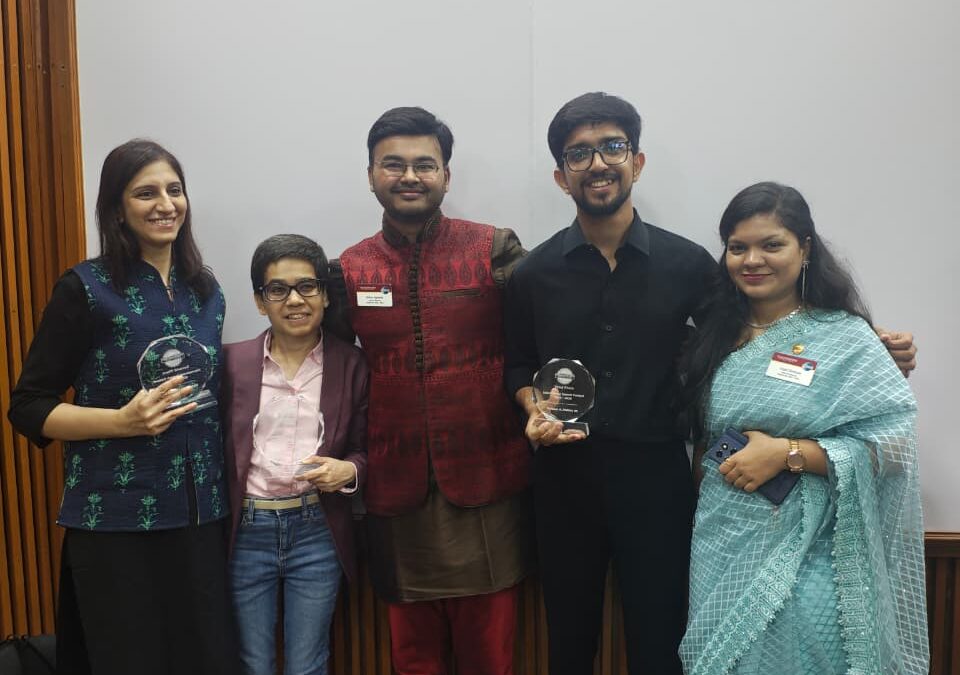
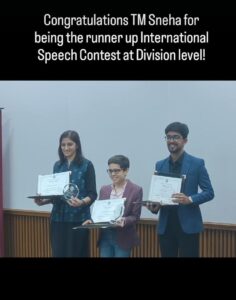
20 Plus Contests Later: What Losing Taught Me That Winning Never Could
Minimum one contest every six months in Toastmasters. For seven years. That’s too many contests. Not just in my club, but across multiple stages, audiences, and cities. I’ve won some. I’ve lost many.
But if I’m being honest, my wins haven’t shaped me nearly as much as my defeats have. Because every time I didn’t make it to the next level, I had the same thought:
“This was my best speech. I don’t think I can write anything better than this.”
And yet, I always returned, back to my notes, stories and the blank page. And somehow, I’d find myself standing in front of an audience again, sharing another piece of myself.
Because deep down, I knew:
It was never just about winning. It was about the drive.
What Failure Teaches That Success Doesn’t
Early success feels beautiful, validating and encouraging. But it doesn’t always teach you what failure does. Failure forces you to sit with discomfort, to watch something you built with care fall apart, to return to square one after thinking you had it figured out. And it takes something to gather the pieces and begin again. That’s where resilience is forged.
That’s where you truly learn what it means to rise.
The Question That Changed Everything: Why Stay?
Recently, while sitting at a café in Vadodara, a few of us reflected on our Toastmasters journeys. Many of them are already thriving in their careers. They don’t need this platform in the conventional sense. And yet, they stay.
Why?
The answers were different but rooted in something deeply similar:
Drive – For some, it’s the community, for others, it’s the stage, for people like me, it’s the stories.
Why I Still Show Up
People often ask me: “Why Toastmasters? Don’t you already have enough going on?”
And my answer is simple.
This space gives me room to think, to refine, to make sense of my experiences. What happens on stage doesn’t stay there. It flows into my classroom, conversations, into how I understand people and myself.
This is my drive – To tell stories, to process life as an educator, a mother, and a person still discovering herself—layer by layer.
Growth Beyond the Stage
This journey has also given me something I didn’t expect: experiences. When I had to travel to Vadodara by train, I said yes instantly. It wasn’t my usual way of traveling. It felt unfamiliar—but exciting. And it wasn’t just about the destination but about the people – conversations with strangers, connections that formed instantly, or didn’t, moments that stayed—or will quietly fade away. Every interaction added a layer of perspective. Because growth isn’t just about finding your voice.
It’s about –
Learning to listen.
To understand.
To coexist with people who are different from you.
And somewhere along the way—you evolve.
A Question for You
Whatever journey you’re on—Toastmasters or otherwise, pause and ask yourself:
What drives you?
Because that’s what will bring you back, even after the losses, the doubts, even when you feel like you’ve already given your best.
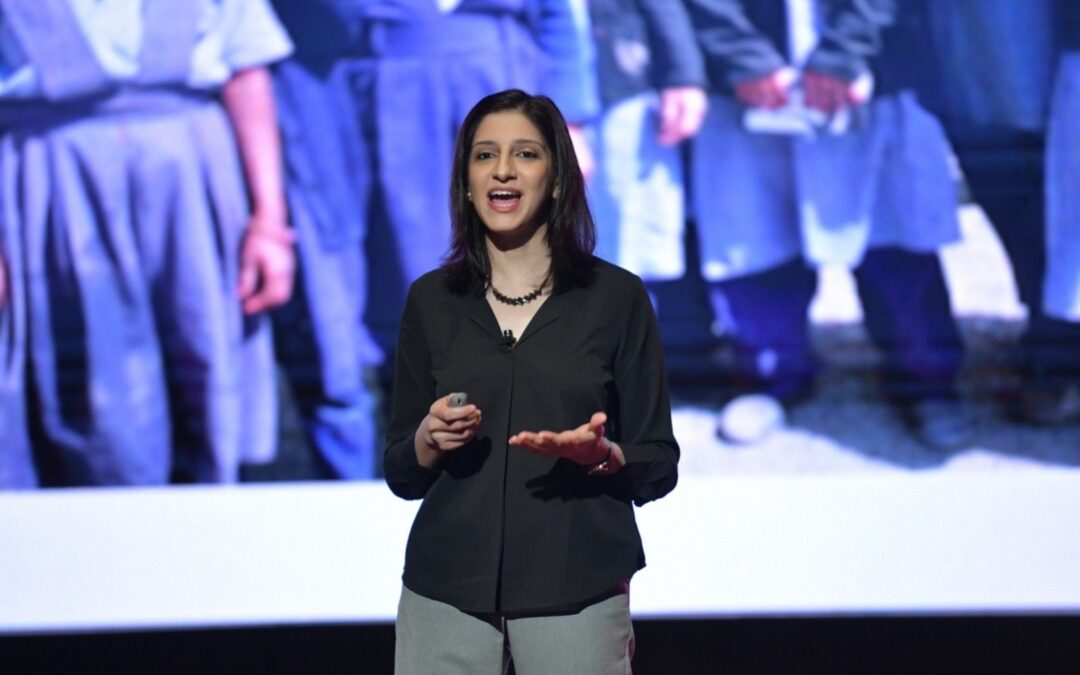
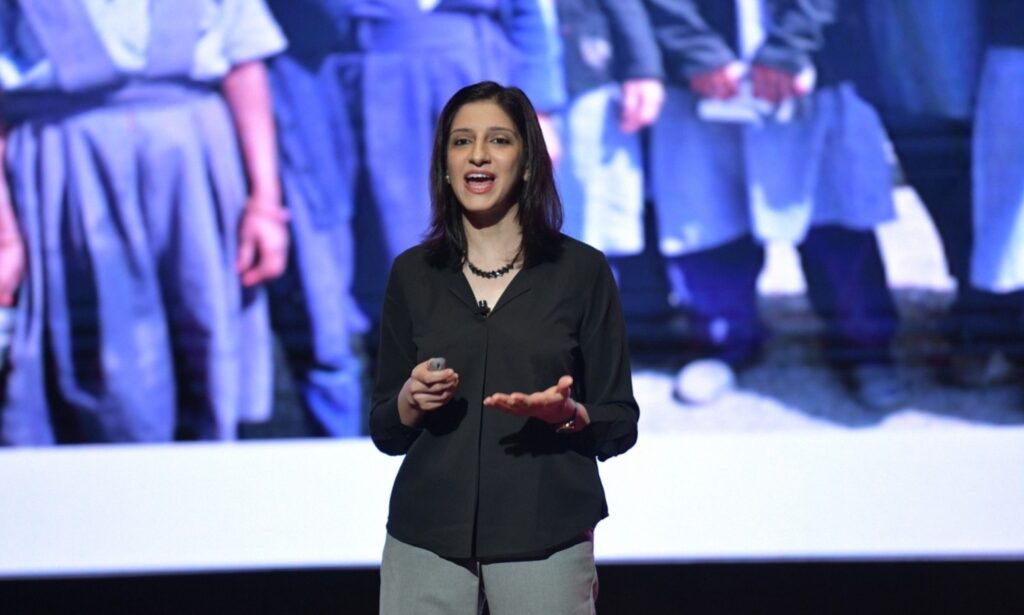
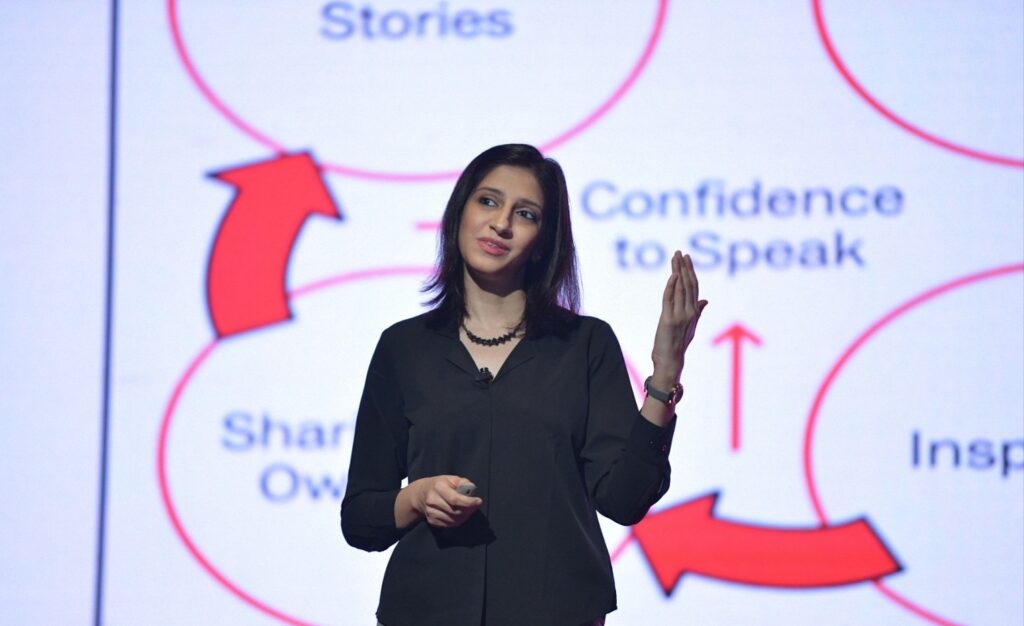
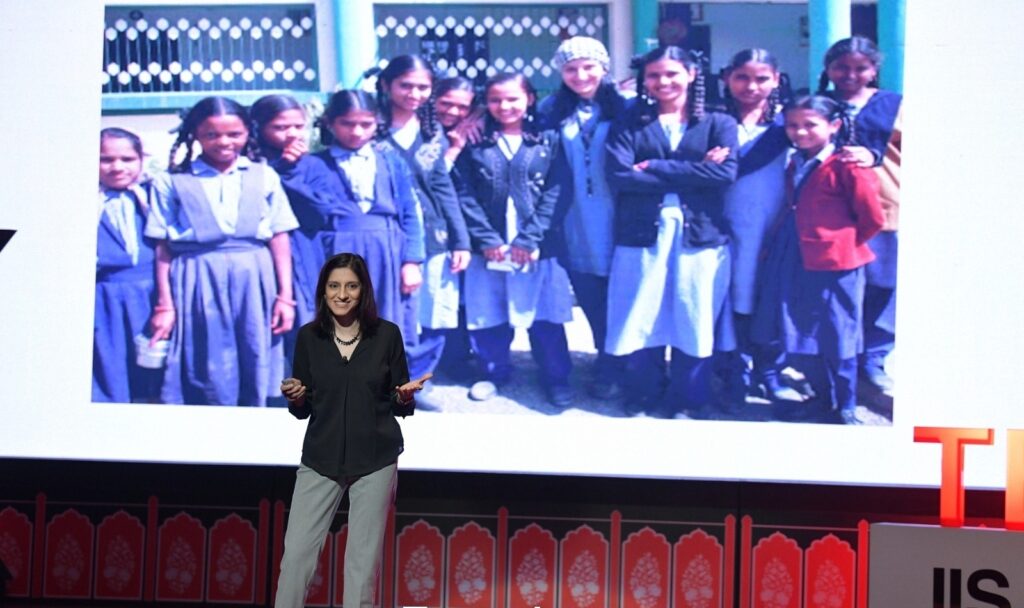
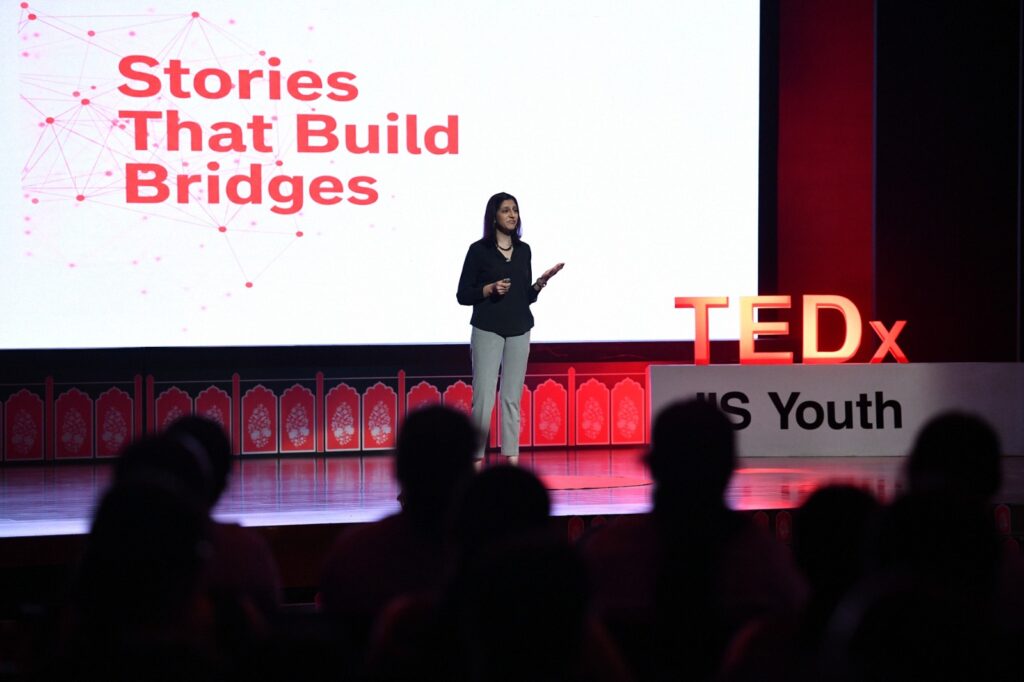
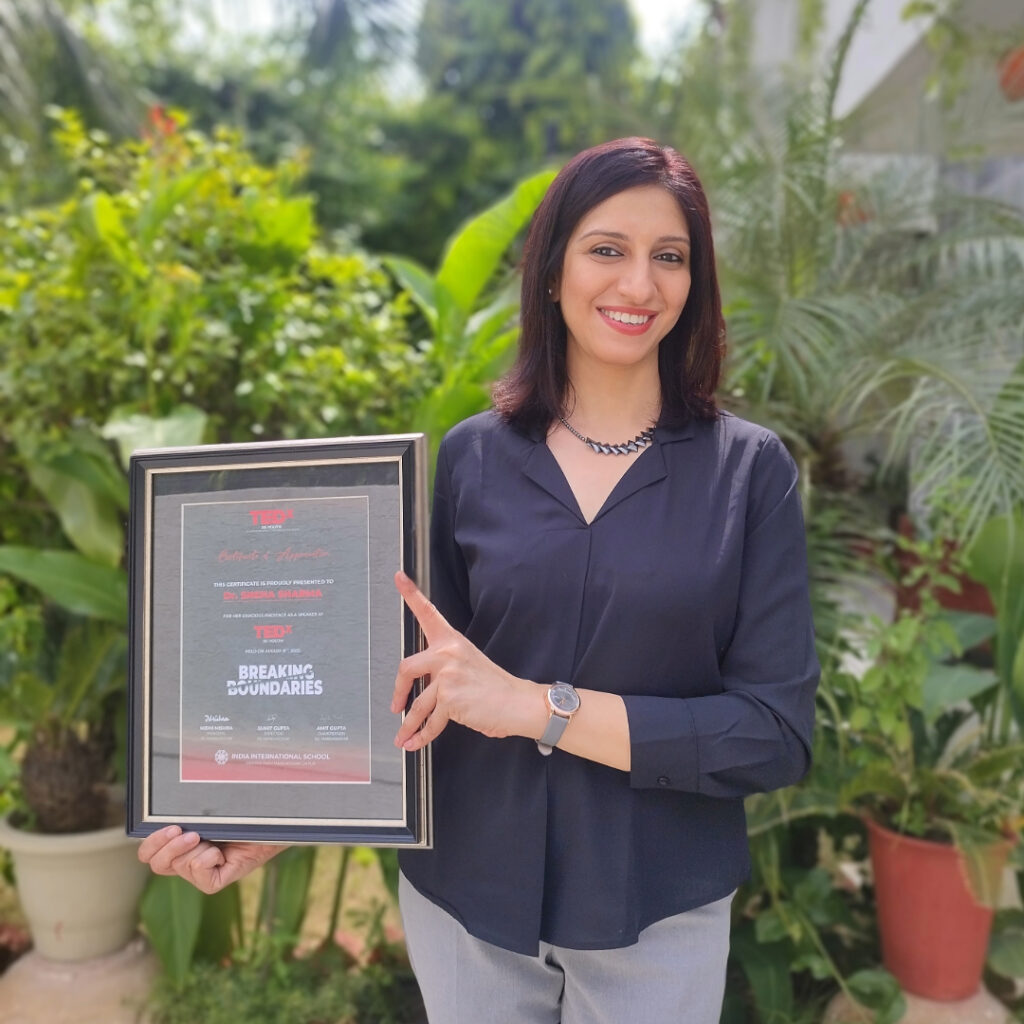
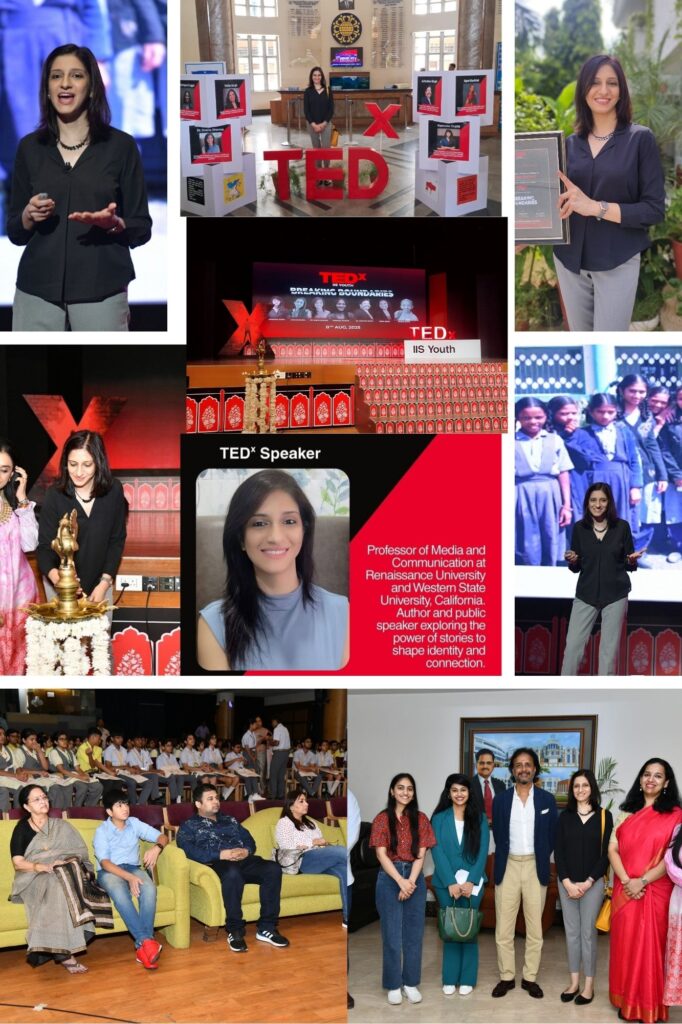
Stepping onto the TEDx stage wasn’t just about the red dot. It was about years of practice, growth, and the quiet courage to break my own boundaries. The official video is still awaited, but here’s a glimpse into my experience.
The TEDx tag attached to this whole affair made me a little apprehensive before my first TEDx talk. But more than anxious, I was curious—curious to see how it all comes together. How does a TEDx event work behind the scenes?
Right after my speaking slot was confirmed, I was put in touch with the vice principal and the student in charge of the event. The vice principal, staff members, student coordinators, and volunteers were all incredibly cooperative.
The aura, the hustle, and the meticulous way they adhere to their roots fascinated me. For example, there are a few rules regarding the content and the PPT slides you present. You can’t name any private organization, even if it’s your own, or mention any particular title you’ve won. In my case, they asked me to remove the names of the film festivals where the documentaries I had scripted won accolades. It was this exclusivity and weight surrounding TEDx that made me a little conscious about my presentation—and yet, it also made the experience feel special.
In many ways, though, the atmosphere felt familiar. For the past seven to eight years, I’ve been visiting institutes as a guest speaker, sharing my experiences in the media field or as an author. So stepping onto this stage to share my story wasn’t entirely new, but it carried a different kind of energy. Once everything was ready, I was completely at ease.
The day before the event, we had a practice session in the empty hall, complete with our PowerPoint slides on screen and the mic on stage. This eased not just my concerns, but also those of the other speakers. The best part, however, was meeting them—some truly charming and pleasing personalities, some dynamic individuals from diverse fields, including one working in AI psychology, which I found fascinating.
Over tea and snacks, we bonded, swapping stories and laughter. I also had the chance to interact with a few suave and intelligent faculty members who were proactive and confident.
When I climbed the stage for practice—and again during the actual event—I was reminded of something Geeta Ramanujam, a well-known storyteller from Bangalore, once said at the Toastmasters Eloquence District Conference: there’s a vast difference between stepping onto the stage for the first time and stepping onto it for the hundredth. That thought immediately grounded me. I realized that, over the years, I’ve stepped onto countless stages—be it at institutes, conferences, or club meetings—and each experience has honed my presence, timing, and composure. This wasn’t uncharted territory for me anymore; muscle memory had kicked in, and the stage felt less like an intimidating spotlight and more like a familiar workspace where I could truly connect with my audience. That mindset allowed me to step into my TEDx slot with a calm focus, letting the content flow naturally and my connection with the audience take center stage.
What I truly enjoyed most was writing and editing my speech. I love this part—tweaking it to match the rules and the theme of Breaking Boundaries, sitting with my mentors to refine it, and gathering invaluable tips from my coaches. I practiced the speech multiple times a day, timer in hand. I also decided on my attire early—a mix of formal and semi-formal, something that always works for me. I resisted buying anything new or expensive; for me, comfort is non-negotiable.
Practicing in front of my family, however, is a different story. I find it a little awkward and often end up laughing, but their feedback is gold. They know me well, not just as a person but as a speaker—what I’ll be comfortable saying and the words I’ll enjoy delivering. Both my husband and kids are great listeners and my most genuine well-wishers, so this “pilot testing” is something I can’t skip. It was my husband who suggested I define empathy in a way my audience would truly understand—an insight that added depth to my speech.
I slept well the night before, woke up on time, had a good breakfast, and reached the venue early. That calm, unhurried start set the tone for the day.
And now, the learnings.
Efforts in the right direction, aligned with your passion, will always suit you. Passion connects you with people who are equally driven and competent in their fields—and some of them may become great friends.
Remember—just as I did this time—your ultimate goal as a speaker is to connect directly with your audience and captivate them through both your content and delivery. That focus helped me overcome anxiety, stay grounded through repeated rehearsals, and rise above petty distractions.
Another lesson: observe your audience. Even through the dim light, I could see students taking notes and smiling at just the right moments. That told me I was making sense to them.
And finally—seek feedback, but choose wisely. I invited my aunt and my son—both intent listeners and honest critics—to attend. Before I could even ask my aunt for her opinion, she told me how the vice principal had walked up to her, congratulated her, and praised my talk. Moments like that stay with you. But it’s important to remember—don’t seek feedback from everyone. Seek it from those you trust to be honest, constructive, and kind, even if they’re strangers you instinctively trust.
The TEDx stage wasn’t just about the famous red dot. It was about what unfolded before, during, and after—the preparation, the presence, the reflections that followed. And, above all, it was about breaking my own boundaries in how I speak, how I carry my confidence, and how I connect with those listening.
The official video isn’t out yet, but I’ll share it as soon as it’s released!
WATCH THIS LITTLE SHORT STORY OF LOVE, SWEETS AND GHOSTS, AND LEAVE YOUR CHILD MESMERISED IN WELCOMING THEIR GRANDPARENTS HOME!!
Remember those syrupy summer mornings, when Mom opened the curtains to the smiling sun and it struck us that it’s the last day of school, and the summer holidays desperately await us?
How we hopped out of the bed early (without mom needing to call), happy to adorn the uniform– for one last time of the session?
It’s that feeling when our mind blew bubbles of plans one after the other and sometimes, we got the news of granny visiting our place! The quintessential Indian granny – our ‘Nani-maa’ and her tales from the village! Her visit made it seem like the entire village is our guest!
Join Samaira and her day-dreaming of spending this quiet but enjoyable summer vacation; this time with Nani-maa in her courtyard! Enjoy this new story by Story Over my Pillow titled – ‘Nani-maa in the courtyard’, a short story in English for kids aged 4 to 7 years.
Order the digital transcripts (Only Story Over my Pillow Originals) of any two stories along with pictures in just ₹100!
Drop a message @sneharmonic on Instagram OR contact from the ‘About Me’ section of this blog, to claim your copy NOW.
Pictures by MAURICE SENDAK | English to Hindi Stories
To add Story Over My Pillow’s unique flavour, we’ve decided to read this delightful tale aloud—while simultaneously translating it into Hindi for children who feel most at home in that language.
Children can be as imaginative as dreams. They dream up the wildest ideas and are always ready to chase them with glee. This charming story of a mischievous little bear who wants to travel to the moon—with nothing but his Space Helmet!—captures that spirit beautifully.
Parents often find comfort in these innocent little adventures of their children, who make them blush with pride and break into a heartfelt smile. 🙂
Today, 1 out of every 5 kids has an ANXIETY DISORDER.
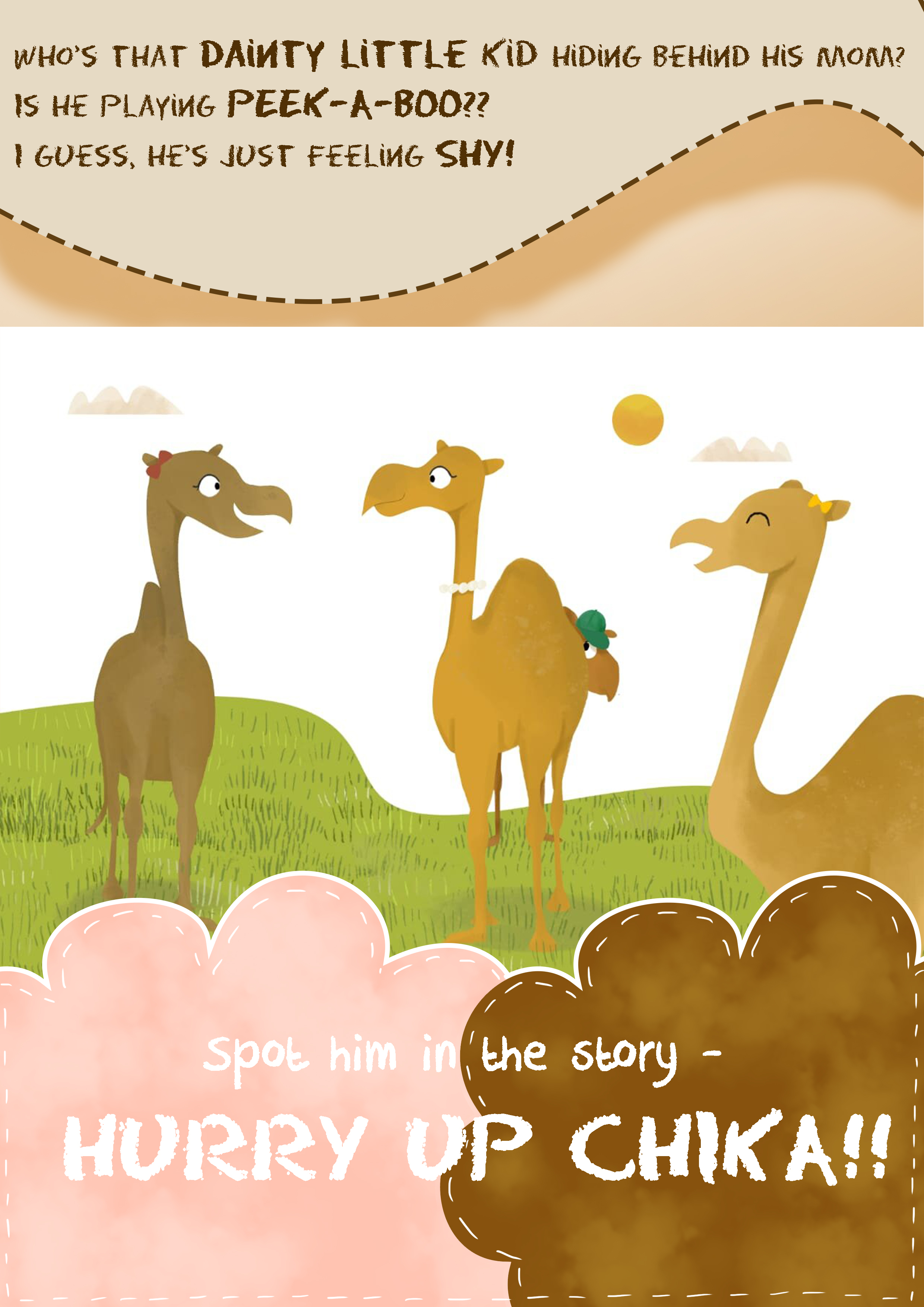
Is your kid much like our ‘Chika’? Help him find ways to deal with his SHYNESS.
As a child, I remember standing near the brick planter of the primary school playground during the lunch break and observing the sparrows sitting on the cemented boundary of the sand pit. I played in the pit till the time there would be only one or two kids rollicking in it. And then on seeing the crowd, would quickly scurry into a corner near the planter.
I would come back home with remarks in the handbook for not mixing up enough with my classmates.
Eventually I was labelled SHY.
At home, amongst the civilized jungle of relatives, I would smile and greet everyone but escape into the kitchen at the first opportunity to help mom.
I was labeled INTROVERT.
Thanks to the few lovely classmates who kept approaching me until I agreed to play with them and to the unconditional support of my family, I have come a long way in learning to EXPRESS myself in more ways than one.
But not many kids are that fortunate.
Renowned psychologist, Dr. Shefali Tsabary suggests 3 SIMPLE WAYS we can help our children deal with it –
Understanding THE SOURCE OF ANXIETY (as the wound lies underneath)
Letting them know that their worth is NOT GAINED BY COMPETITION AND SUCCESS.
Children are masters of living in the PRESENT – their ZEAL must remain intact and not be killed by the INSANE PRESSURES of the current culture.
While I am still an introvert (enjoying to spend more time alone than with people), the shyness (hesitation to interact) is no more!
In a world where society celebrates extroversion, I guess it would be unfair and maybe even devastating to push our children into it while their natural make doesn’t allow them to be so.
Listen to this story which attempts to FLAG THE PROBLEM in a subtle yet entertaining way.